
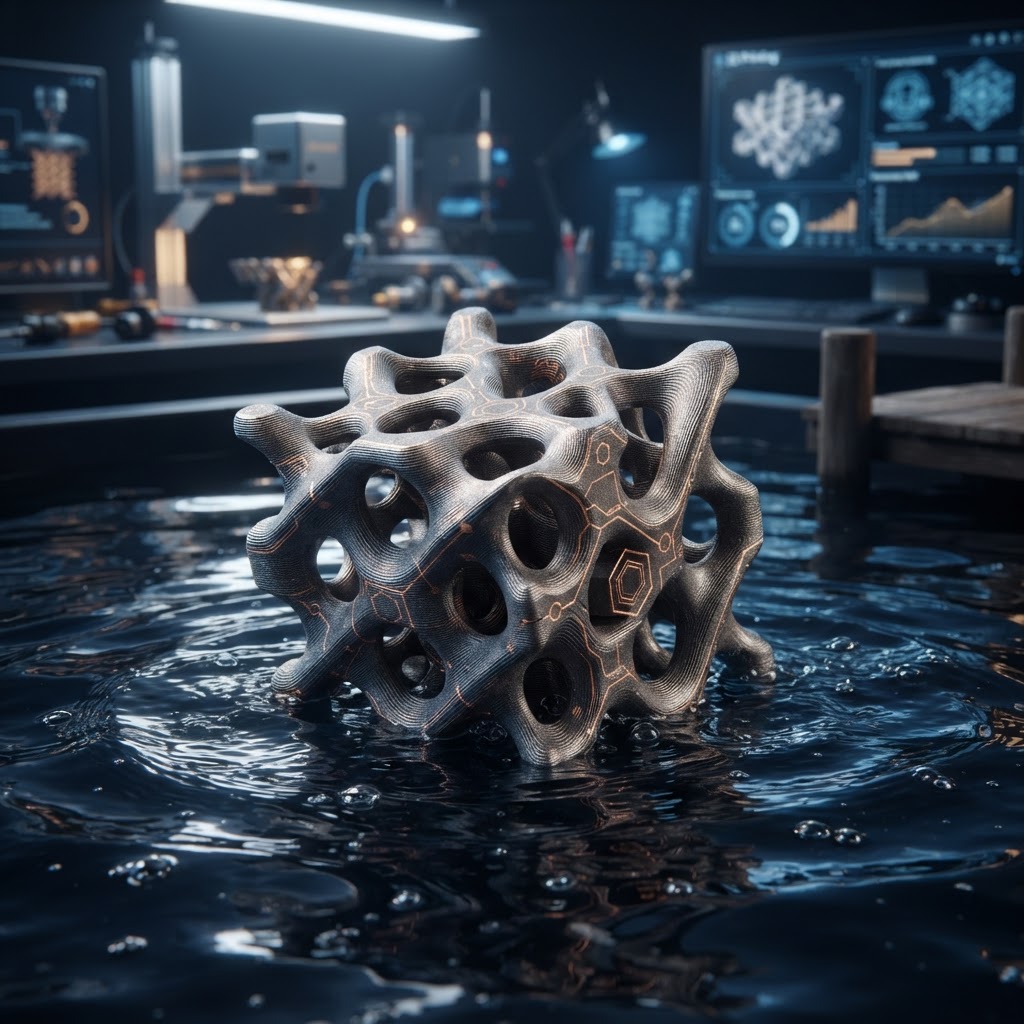
The world of additive manufacturing is constantly pushing the boundaries of what we thought was possible. Recently, engineers at RMIT University achieved a groundbreaking milestone: they have developed a 3D-printed titanium lattice that is capable of floating in water. This innovation is not just a scientific curiosity; it represents a massive leap forward for marine infrastructure, offering a durable, high-strength alternative to the materials we currently use for jetties, buoys, and sensors.
The Science Behind Floating Metal
For years, the challenge with metallic structures has been simple physics. While metallic lattices can be designed to be incredibly lightweight—often less than one-tenth the density of water—their open, interconnected spaces typically allow water to flood in, causing them to sink.
To solve this, the RMIT research team utilized a clever hybrid design. They created a 3D-printed titanium framework consisting of hollow, interconnected struts. By filling these specific struts with polyurethane foam, they created a structure that remains buoyant even when water flows through the rest of the lattice. This design effectively traps gas within the foam, ensuring the material stays afloat even if the structure sustains significant damage, such as cracking or the fracture of an entire layer.
Why This Matters for Engineering
This new material is more than just "floaty metal." In mechanical testing, the titanium lattice proved to be 70% stronger than the stainless steel or high-density polyethylene commonly used in marine environments today.
Key benefits of this metamaterial include:
- Exceptional Durability: It withstands harsh seawater exposure with minimal mass loss or strength degradation.
- Damage Tolerance: Unlike traditional hollow marine structures that fill with water when cracked, this lattice maintains its buoyancy even after severe structural impact.
- Tailorable Design: By adjusting the internal materials or the lattice geometry, engineers can adapt the structure for energy absorption, vibration control, or thermal management.
Pro Tip: The researchers developed a new metric called skeletal density to predict buoyancy. This rule helps engineers determine if a structure will float based only on the parts that exclude water, providing a new standard for designing future marine components.
Beyond the Ocean: The Future of Custom Creation
While this research is currently focused on large-scale marine infrastructure, the principles of 3D-printed lattice structures highlight the incredible versatility of modern manufacturing. At Vixera, we are inspired by these advancements in additive manufacturing. While we don't print in titanium for marine engineering, we use similar 3D printing and laser engraving technologies to bring your unique ideas to life.
Whether you need a custom prototype, a personalized figurine, or a bespoke decorative piece, our team is here to turn your vision into a physical reality. We specialize in creating high-quality, custom-manufactured items tailored specifically to your needs.
Final Thoughts
The development of floating titanium is a testament to how 3D printing is revolutionizing material science. As these technologies become more accessible, the potential for creating custom, high-performance parts is limitless. At Vixera, we are passionate about the power of custom manufacturing. If you have a project in mind—from custom signs and home decor to specialized prototypes—we have the expertise to create it for you.
Ready to bring your project to life? Contact Vixera today to discuss your custom 3D printing or laser engraving needs. Let’s create something extraordinary together!